

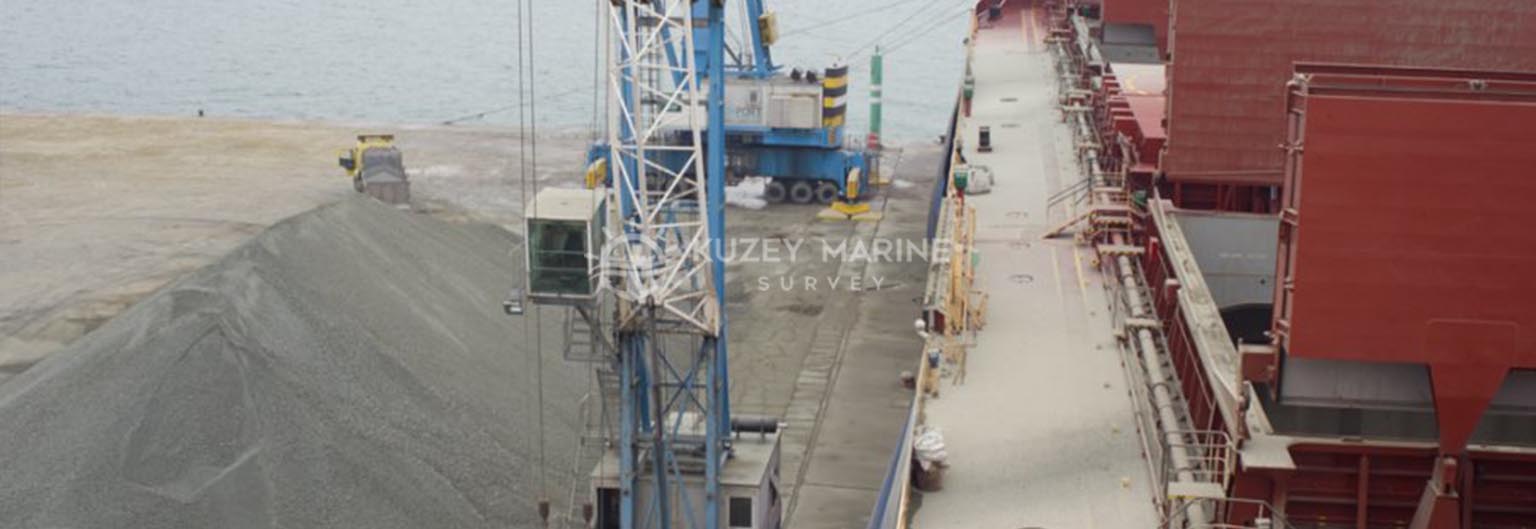
Comprehensive Assessment of Bulk Minerals and Ores

Minerals and ores are classified as some of the most complex and risk-sensitive categories within bulk cargo transportation. These materials may vary significantly in density, moisture content, particle size and flow characteristics, making them susceptible to hazards such as liquefaction, shifting, contamination or loading imbalance. A professional survey is essential to verify the safe carriage of these cargoes, ensure compliance with international regulations, and prevent commercial disputes.

Kuzey Marine Survey provides detailed inspection services for a wide variety of minerals including iron ore, manganese, bauxite, coal, clinker, chrome and other metallic or non-metallic ores. Our assessments focus on both technical and operational parameters to guarantee safety, transparency and accuracy for all stakeholders involved.

Sampling, Moisture Testing, Cargo Behaviour Monitoring and Loading Control

The survey begins with cargo characterization. Moisture content is checked against Transportable Moisture Limit (TML) values for IMSBC Group A cargoes, which pose a liquefaction risk. Representative samples are collected according to international sampling protocols, ensuring accurate laboratory results. These findings determine whether the cargo can be safely loaded.

During loading, surveyors monitor distribution, trimming, cargo height, stability impact and the structural behaviour inside each hold. Any risk of shifting, uneven loading or excessive stress on bulkheads is immediately identified. Additionally, the angle of repose, compaction characteristics and physical reaction during handling are continuously observed, allowing early detection of dangerous changes.

Operational controls extend to monitoring conveyors, grabs, loaders and vessel stability calculations. The goal is to achieve a safe loading plan that adheres to both the vessel’s limitations and international bulk cargo handling rules.

Discharge Supervision, Loss Prevention and Reporting

During discharge operations, the actual outturn quantity, cargo degradation, moisture changes and visual defects are assessed. Any signs of contamination, heating, lump formation or handling-related damage are documented with photographs and measurements. Equipment performance, safety compliance and hold cleanliness are also reviewed.

At the end of the survey, a technical report is issued containing:

  • Cargo classification & IMSBC Code reference

  • Moisture, TML and flow behaviour assessments

  • Sampling procedures and laboratory outcomes

  • Loading or discharge procedural records

  • Verified quantity assessments

  • Risk analysis and recommendations

This report helps prevent losses, ensures commercial clarity and supports claims or insurance documentation when required.